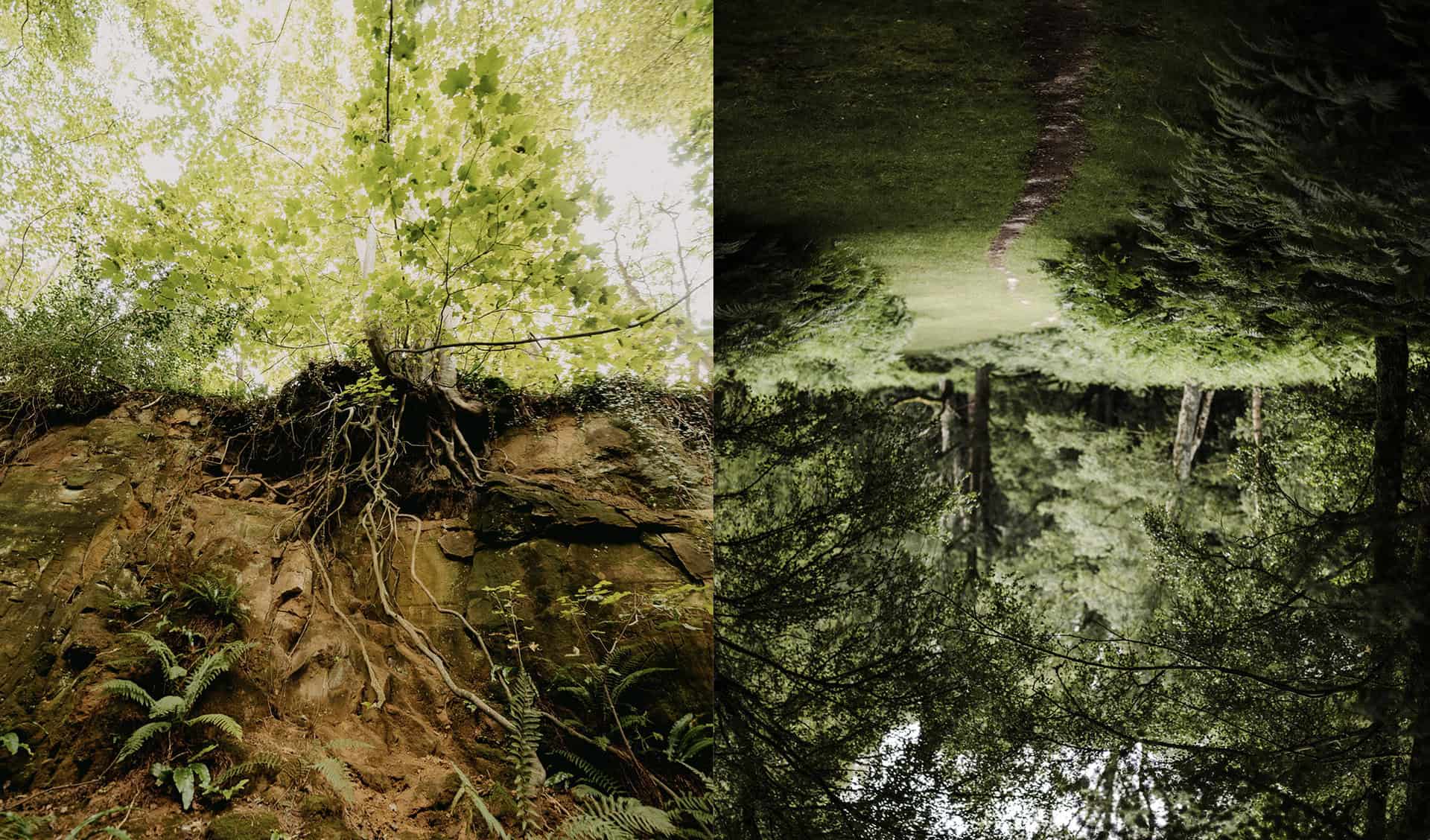
Five forest frontiers
The fascinating but questionable theory of forest transition. Forests may the crown of natural succession in the evolution of planet Earth but for humanity on the rise forests have been a resource to be cut down to make way for industrial progress. Until a certain forest minimum is reached. Then, a transition occurs. At that transformative moment the forest regains value of different sorts. As a replenishing source for human health and restoration and as a means for rewilding and biodiversity. A rather sinister theory, with a certain level of accuracy. According to Georg there are five frontiers for such transformation of forest values:
The urbanization frontier – a cultivation of land and deforestation is followed by a re-spiritualization of nature as part of urban cultures. Romantic ideas about pristine forests and a tourist capitalization of authentic forests. The more urban people live, the more forests ought to be pristine and spiritual.
The global land use frontier – a global convention on forests has failed and is compensated by regional or state commitment that can easily become trapped between ‘protecting the environment’ and ‘protecting the market’. A highly volatile field of changing political views that are mostly bad for the long-term needs of old forest development.
The integration of bioeconomy and biodiversity frontier – a deep conflict between industrial forestry and biodiversity conservation, including a pathway to multifunctional land use and biobased use of forest resources. For a large part federal forest lands are now drastically changing policy in favor of biodiversity conservation. While on private lands that are not regulated, an industrial forestry continues.
The climate change frontier – a forest service dominated by the carbon cycle – as carbon sinks, but also as a carbon source through deforestation. Forests can also contribute to adaptation through, for example, the cooling effect of trees. And forests themselves are transforming through climate change.
The forest rights and justice frontier – the major questions of societal participation, representation, and environmental justice. In several tropical countries, public forest governance is decentralized, establishing community forests. In Europe a rapidly expanding rights of nature movement seems to gain momentum to both act as a voice for nature in decision making processes and in ownership propositions and forests that are not people-owned but ‘of themselves’.
_Georg Winkel